


Type: coffee table
Tuscani Italian Travertine Coffee Table - Kidney Curved 68"L

Type: coffee table
Waverly White Marble Coffee Table - Italian Contemporary Design

Type: coffee table
Palermo Beige Travertine Onyx Coffee Table 52" Modern Stone
Type: coffee table
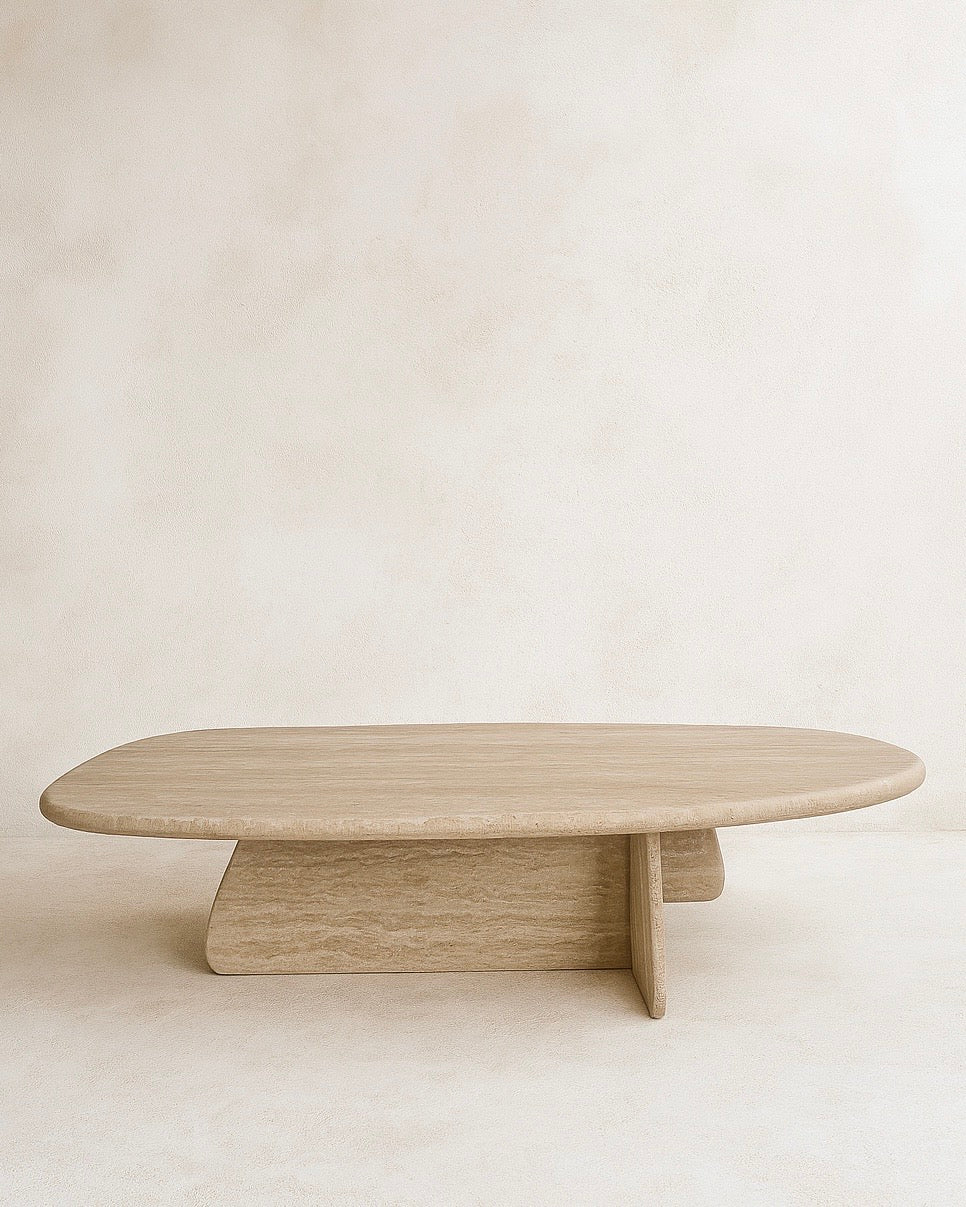
Toscana Italian Travertine Coffee Table - Hand-Carved Stone Pedestal Base

Type: coffee table
Solenne Onyx Marble Table
Every coffee table in this collection is cut from solid natural stone — Italian travertine, white marble, or banded onyx. No veneers, no stone-look laminate. Because each slab is quarried individually, the veining on the table you receive will not match the photograph exactly, and that is rather the point of buying stone.
The pieces
- Tuscani Italian Travertine — a kidney-curved 68" top in warm cream travertine, raised on three tapered legs. The largest and most sculptural silhouette here.
- Toscana Italian Travertine — a hand-carved stone pedestal base, for rooms where four legs would visually crowd the floor.
- Palermo Travertine Onyx — 52" in beige travertine onyx, with more pronounced parallel banding than the Tuscani.
- Waverly White Marble — Italian contemporary lines in cool white marble; the option that reads most modern in a neutral room.
- Solenne Onyx — the most dramatically banded stone of the group.
Marble, travertine or onyx — which should you choose?
Marble is the densest of the three and takes the highest polish, with fine grey veining over a white ground. Travertine is a limestone: softer, warmer, and marked by the open pores and cloudy banding that give it a more organic character. Honed travertine also disguises ring marks far better than polished marble, which matters on a coffee table. Onyx sits between the two, prized for bold parallel banding.
If your room runs warm — oak floors, cream upholstery, brass — travertine will sit more comfortably. If it runs cool and architectural, the white marble is the better match.
Living with a stone top
Seal a stone coffee table roughly once a year, and wipe spills as they happen: red wine, citrus and cooking oil are the three that etch fastest. Use a pH-neutral stone cleaner rather than a general-purpose spray, which is usually too alkaline for calcite stone. Every piece here is solid stone and heavy enough to need two people to position, so settle on the layout before delivery day rather than after.